great smoky mountains national parksmoky mountain guidewinterfestspringfestpigeon forge cabinsmoky mountainssmoky mountainscontactpark policiessmoky mountain bookstoresmokies historygreat smoky mountains national parkweddings gatlinburgsmoky mountain festivalswildlifescenic tours smoky mountainsthings to do in Great Smoky Mountains National ParkGreat Smoky Mountains National Park

101 Reasons to Visit
Great Smoky Mountains National Park


alpine mountain chalets

Park Map | Site Map | Fall Colors | Email this page to a Friend | FREE Visitor Packets
great smoky mountains national park
1. Cades Cove great smoky mountains national park
national parks

pigeon forge cabin

black bear ridge resort pigeon forge

cades cove
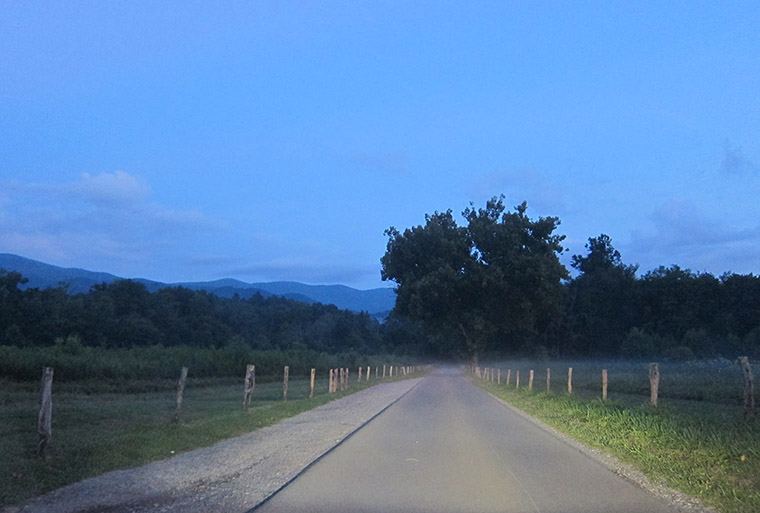
great smoky mountains national park Cades Cove is a lush valley surrounded by mountains and is one of the most popular destinations in the Great Smokies. This 11 mile loop is a peaceful driving tour and is used for bicycling. Throughout the Cove you will see historic buildings, including rustic log homes of original residents of the Cove, several churches, an old mill, molasses making equipment, and cemeteries.
[Cades Cove]
2. Elk Viewing
elk in smoky mountains
The best times to view elk are usually early morning and late evening. The best places to view elk are in the Cataloochee Valley and at the Cherokee entrance to the Park. The experimental release of elk into the Park began in February, 2001 with the importation of 25 elk from the Land Between the Lakes National Recreation Area along the Tennessee-Kentucky border. In 2002, the park imported another 27 elk. [Elk]
3. Horseback Riding
horseback riding smoky mountains
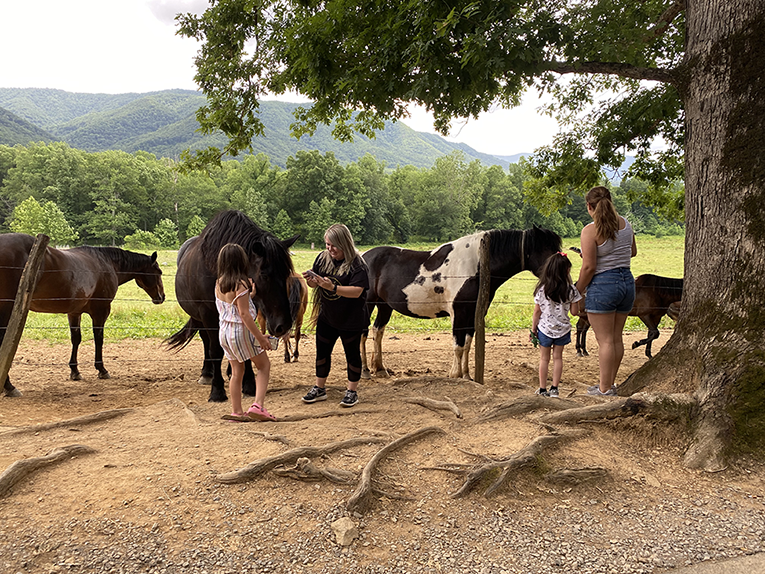
Great Smoky Mountains National Park has hundreds of miles of horse trails and five drive-in horse camps. Horse riding stables are located at Sugarlands (at the Gatlinburg entrance to the Park; 865-436-3535), Cades Cove Riding Stables (865-448-6286), Smokemont (4.5 miles from Cherokee, 828-497-2373), and Smoky Mountain Riding Stables (Hwy 321, Gatlinburg, 4 miles east of Gatlinburg, traffic light #3; more
4. Fall Colors
fall colors smoky mountains
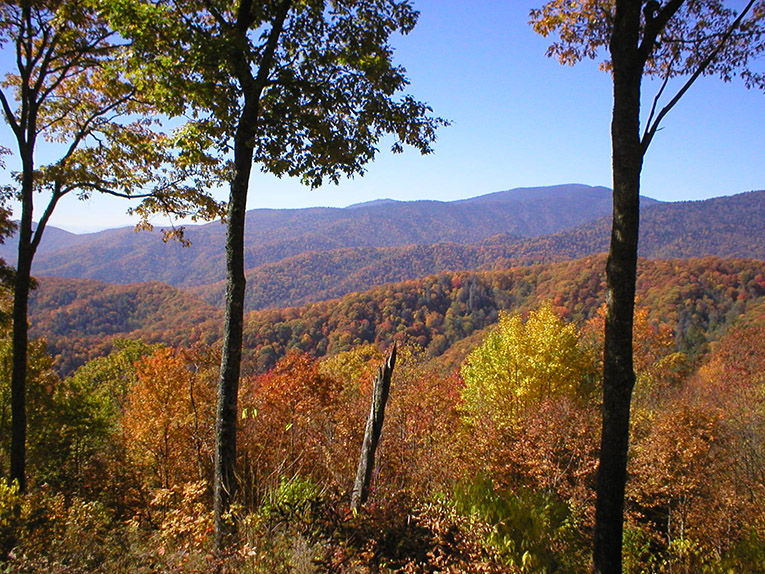
Tree leaves in the Smokies change colors in Autumn and peak between mid-October and early November. One of the reasons fall colors in the Smoky Mountains is so beautiful is the park’s amazing diversity of trees. Approximately 100 species of native trees live in the Smokies, and the vast majority of these are deciduous.
[Fall Colors Photo Tour]
5. Hiking Trails
appalachian trail
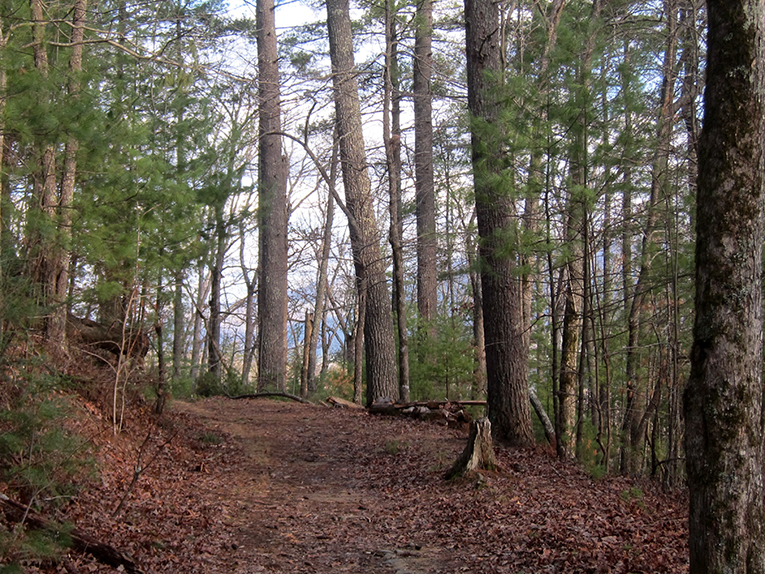
Over 800 miles of maintained hiking trails are in the national park. Some of the most popular trails include Mt. LeConte, the 8 mile round-trip to Charlies Bunion which is located on the Appalachian Trail, the Chimney Tops Trail, Laurel Falls Trail, Abrams Falls Trail, and Ramsey Cascades Trail. Viewing of wildflowers, cascading streams, the scent of evergreens, and the sounds of birds are best seen and experienced on the trails. [Hiking]
6. Whitewater Rafting
whitewater rafting
A rafting trip down a cool mountain river is nothing less than exhilirating, and the scenery is just as beautiful. A scale of class ranges are available, depending on your age and experience in whitewater rafting. Your Smoky Mountain surroundings will enable you to leave your cares behind and enjoy a day of great outdoor adventure. [Whitewater Rafting Packages]
7. Smoky Mountain Train Ride
smoky mountain train ride
The Great Smoky Mountains Railroad offers a variety of excursions and special events throughout the year. Gourmet Dinner Trains run Saturday evenings beginning early February. Mystery Theatre Dinner Trains run on select Friday evenings, early May through early November. Rail stations are located in Dillsboro and Bryson City, North Carolina. [web site]
8. Llama Trekking
llama trekking smoky mountains
Enjoy guided llama trekking through the Great Smoky Mountains without carrying a backpack! Let a gentle and well trained Llama Trekking Team do all the work as you enjoy a safe, authentic and rewarding wilderness hiking experience. Llama treks vary from day (picnic) hikes to two day hiking trips or longer. There are treks for the experienced hiker as well as for the entire family. [web site]
9. Hot Air Balloon Rides
helicopter rides smoky mountains
Hot air balloon rides in the Smoky Mountains offer a variety of exciting flights throughout the Smoky Mountains area. You will see views of the Smoky Mountains as you see pristine land from a completely new vantage point. You can even get married on one of these hot air baloons. From your aerial vantage point you can view Cherokee Lake to the north and Douglas Lake to the south, with the majestic Smoky Mountains in the background.
10. Fishing in Mountain Rivers
fishing smoky mountains
There are over 700 miles of fishable streams in the park. First time anglers to the Smokies should stop by a ranger station or visitor center to ask advice. Sporting goods stores in surrounding communities often house some of the Park's most avid fishermen. Fishing licenses must be displayed on demand by authorized personnel. State trout stamps are not required. [Fishing]
11. The Foothills Parkway
foothills parkway
The Foothills Parkway skirts the park's northern side. Only three sections are currently open to vehicle traffic. This scenic drive stretches along 17 miles and travels along the backbone of Chilhowee Mountain between Chilhowee Lake and Townsend. You may view Great Smoky Mountains National Park and the beautiful valleys of the Tennessee River Valley bordered by the plateau of the Cumberland Mountains.
12. Smoky Mountain Snowfalls
snow smoky mountains
Snowfalls in the Smoky Mountains are awesome! October usually brings the first snowfall with periodic snows continuing through mid-March in higher elevations. Ski slopes open up during winter months in the nearby ski resorts of Ober Gatlinburg and Cataloochee Ski Resort in Maggie Valley, North Carolina. Snow depths range from a couple of inches to several feet of new fallen snow.
13. Spring Wildflower Pilgrimage
spring wildflower pilgrimage
This seven-day event in Great Smoky Mountains National Park consists of a variety of wildflower, fauna, and natural history walks, motorcades, photographic tours, art classes, and indoor seminars. Most programs are outdoors in the Park, while indoor offerings are held in various venues throughout Gatlinburg, TN. This popular annual event is headquartered at the W.L. Mills Conference Center in Gatlinburg. [More info]
14. Fall Harvest Hayrides
hayrides cades cove
Guided hayrides leave from the Cades Cove Riding Stables each night the last of October. Advance reservations are required and can be made by calling 865-448-6286. Cost: $8 per person 2 years old and up.
15. The Appalachian Trail
appalachian trail
The Appalachian Trail (2,100 miles) crosses through Great Smoky Mountains National Park. The entire trip takes 4 to 6 months, crossing 14 states, 8 national forests, 2 national parks and 15 major rivers. Elevations range from 6,643 feet at Clingmans Dome in the Smokies to near sea level at the Hudson River in New York. The segment within the park follows the Smokies ridgeline 69 miles for nearly the entire length of the park.
16. Cataloochee Valley
cataloochee valley
The Caldwell House in Cataloochee
Cataloochee Valley is nestled among some of the most rugged mountains in the southeastern United States. Surrounded by 6000-foot peaks, this isolated valley was the largest and most prosperous settlement in what is now Great Smoky Mountains National Park. Once known for its farms and orchards, today Cataloochee is one of the most picturesque areas of the park. Directions: From interstate I-40, exit at North Carolina exit #20 and travel 0.2 miles on route 276. Turn right onto Cove Creek Road and follow the signs 11 miles into the Cataloochee Valley.
17. Fontana Dam
fontana dam
Fontana Dam is the tallest dam east of the Rocky Mountains. Fontana Lake offers boating and fishing and access to remote, historic areas of the park. Directions: Follow U.S. 74 west from Bryson City. Turn right at the State Highway 28 turnoff. Follow State Highway 28 until the turnoff to the right for Fontana Dam. From Maryville, follow U.S. 129 south. Turn left at State Highway 28. Go approximately 10 miles to turnoff on left.
18. Clingman's Dome
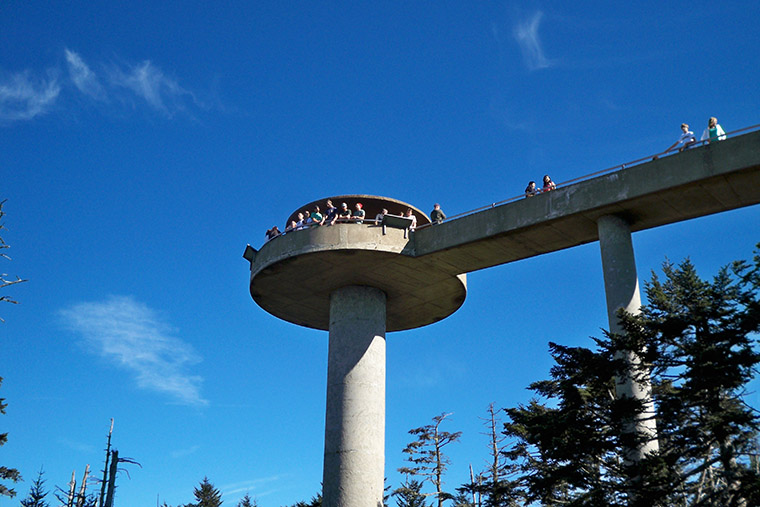
At 6,643 feet, Clingmans Dome is the highest point in the Great Smoky Mountains National Park. It is the highest point in Tennessee, and the third highest mountain east of the Mississippi. The road to Clingmans Dome is open from mid-April until early November. Clingmans Dome has the most beautiful views in the Park. It also accesses The Appalachian Trail.
[web site]
19. Newfound Gap
newfound gap
At an elevation of 5,046 feet, Newfound Gap is the lowest drivable pass through Great Smoky Mountains National Park. Newfound Gap is 13 miles from Sugarlands Visitor Center (2 miles from the Gatlinburg entrance) and 22 miles from the Cherokee Indian Reservation in Cherokee, North Carolina. This mountain pass is situated along the border of Tennessee and North Carolina with the state line dividing the gap. [Newfound Gap]
20. Wildlife Viewing
black bear
The Smokies have the most biological diversity of any area in the world's temperate zone. Wildlife includes black bear, wild turkey, white-tailed deer, elk, wild boar, mountain lions, fox, bobcats, mink, and exotic wild hogs. The best times to view wildlife is in the mornings and early evening. Fox, wild hogs, mountain lions, and bobcats are more frequently seen after dark and before sunrise. [Wildlife]
21. Mount LeConte
mount leconte
Mount LeConte is the highest peak in the Eastern part of the United States at an elevation of 6,593 feet. Mount LeConte is accessible from five major trails with the most popular being Alum Cave Bluffs Trail. Lodging on the mountain top can be reserved at LeConte Lodge which offers rustic accommodations. There are no showers. Kerosene is used for heat and light. Only a wash basin is available for a sponge bath. Reservations: 865.429.5704 [web site]
22. Mountain Rivers
mountain river
There is no better place to enjoy peace than sitting beside a cool Smoky Mountain river. Listening to the water flow over huge rocks will lift anyone's spirit. All picnic areas and campgrounds within the Park are located on a river. Between the sound of the river and the crickets at night, you will experience a wonderful night's sleep after a day or even a short period of time spent on the river. [Rivers and Streams]
23. Bicycling
bicycling smoky mountains
Some of the most beautiful biking trails in the U.S. are in the Park; one at Cades Cove and the other at Deep Creek. During summer and fall, bicycles may be rented at the Cades Cove store (located near Cades Cove Campground; 865-448-9034). Other biking areas include Greenbrier and Tremont roads in Tennessee, portions of the Foothills Parkway in Tennessee, and Lakeview Drive and Cataloochee Valley in North Carolina. [bicycling]
24. Waterfalls
waterfalls great smoky mountains national park
Great Smoky Mountains National Park has 11 major waterfalls: Abrams Falls, Grotto Falls, Hen Wallow Falls, Indian Creek Falls, Juney Whank Falls, Laurel Falls, Mingo Falls, Mouse Creek Falls, Rainbow Falls, Ramsey Cascades, and Tom Branch Falls. There are 2 waterfalls to which you can drive: Meigs Falls and Place of a Thousand Drips. [waterfalls]
25. Picnicking
picnic area smoky mountains
Picnic areas are located at Big Creek, Chimney Tops, Cades Cove, Collins Creek, Cosby, Deep Creek, Greenbrier, Heintooga, Look Rock, Metcalf Bottoms, and Twin Creeks. Picnic sites have a picnic table and a raised grill for cooking. Restrooms are located in picnic areas. Cades Cove and Chimney Tops picnic areas have handicapped accessible picnic tables. [picnic areas]
25. Camping
camping smoky mountains
Camping in Great Smoky Mountains National Park can be backcountry, frontcountry, group camping, and horse camping. The most popular is frontcountry which is camping near your vehicle in a developed campground with restrooms. Backcountry camping requires one to hike several miles to a site located in the park's backcountry. Large campsites are available for groups of 8 or more people. Horse camps offer hitch racks for horses. [camping]
26. Wildflower Viewing
rhododendron
Over 1,660 kinds of flowering plants are found in the Park, more than in any other North American national park. Rhododendron and mountain laurel are the most popular wildflowers in the Park. Rhododendron blooms in May, and mountain laurel blooms in June. Rosebay rhododendron is the most common rhododendron in the Smokies and thrives around streams and in ravines at elevations below 5,000 feet.
27. Historic Buildings
cades cove church
Nearly 80 historic structures—homes, barns, churches, schools, and grist mills—have been preserved in the Park. The best places to see these historic buildings are at Cades Cove, Cataloochee, Oconaluftee, and along the Roaring Fork Motor Nature Trail. Grist mills are still functioning in Cades Cove, Oconaluftee and Roaring Fork.
[historic buildings]
28. Driving Trails
mountain river
There are 11 driving trails in Great Smoky Mountains National Park: Balsam Mountain Road, Cades Cove Loop, Cataloochee, Cherokee Orchard Road, Foothills Parkway East, Foothills Parkway West, Heintooga Ridge, Lakeview Drive, Parson Branch, Rich Mountain Road, Roaring Fork Motor Nature Trail. Along these driving trails you will see historic buildings, flowing r ivers, and beautiful mountain scenery. Campers and RVs are not permitted on the driving trails. [driving trails]
29. Elkmont
elkmont
Like many towns which sprang up during the early part of this century and centered around the utilization of natural resources, Elkmont, Tennessee was quick to expand and just as quick to fade back into small town obscurity. Near Townsend, Tennessee along the banks of the Little River, Elkmont saw its booms and busts. This logging town saw its beginnings in the early 1900s. Elkmont is now a frontcountry campground for Smoky Mountain tourists. [elkmont]
30. Smokemont
smokemont
Smokemont was once a thriving lumber town with homes, businesses and a school. When the logging camps in the Park played out people moved on and the area became a part of the National Park. Still remaining in the Smokemont area is Lufty Baptist Church and Bradley Cemetery. Smokemont once housed a logging mill, commissary, houses, a club house, and a hotel. Smokemont is now a campground maintained by the National Park Service. [Smokemont]
31. Look Rock
look rock mountain
This scenic drive stretches along 17 miles and travels along the backbone of Chilhowee Mountain between Chilhowee Lake and Townsend. You may view Great Smoky Mountains National Park and the beautiful valleys of the Tennessee River Valley bordered by the plateau of the Cumberland Mountains. A short hike to a lookout tower takes only 15 minutes from the Look Rock overlook. Lake of the Sky and Chilhowee Lake are located along this section of the Foothills Parkway.
32. LeConte Lodge
leconte lodge
LeConte Lodge, located in the Great Smoky Mountains National Park, is atop Mt. LeConte, which is 6,593 feet high. Any of the five trails to the top offer spectacular vistas, delicate flora, and bountiful wildlife. LeConte Lodge is accessible only by trail. Reservations are required and can be made by calling 865-429-5704. [leconte lodge]
33. Charit Creek Lodge
charit creek lodge
Located in Big South Fork National River and Recreation Area, Charit Creek Lodge is situated in a valley at the junction of two streams, Charit Creek and Station Camp Creek. Well-maintained hiking and horse trails lead you along interesting and beautiful forests and streams on your way to the lodge. Great for groups, families and kids. Reservations are required and can be made by calling 865-429-5704. [charit creek]
34. Tubing
tubing smoky mountains
Tubing down a cool Smoky Mountain river is a great way to spend a hot summer day. Several places offer tube rentals and will transport you back after you have gone down river so you can start all over again. Some of the more popular tubing areas are at the Wye in Townsend and throughout the town of Townsend. You will also find tube rentals on Wears Valley Road between Pigeon Forge and Townsend. Some of the whitewater rafting businesses also offer tubing. [tubing]
35. Hayrides
hayrides cades cove
Enjoy an open-air hayride viewing wildlife and discovering the diversity of life in Cades Cove. Depart from Cades Cove Riding Stables every Friday from late June to mid-August. 6:30 PM to 8:30 PM. $8 per person. The Park also offers Fall Harvest Hayrides in October. Reservations are required. Private businesses, including some horseback riding stable, on the outskirts of the Park also have hayrides throughout the year. [hayrides]
36. Carriage Rides
carriage rides
Carriage Rides are offered in Cades Cove. Rides depart from the Cades Cove Riding Stables.
37. Mountain Farm Museum
mountain farm museum oconaluftee
The Mountain Farm Museum, situated on the banks of the Oconaluftee River just inside Great Smoky Mountains National Park, is a collection of of southern Appalachian farm buildings assembled from different locations throughout the Park. Most of the structures at the Oconaluftee Mountain Farm Museum were built in the late 19th century by the Davis family and were preserved at the Mountain Farm Museum in the 1950s. The museum is just outside Cherokee, NC.
38. Roaring Fork Motor Nature Trail
roaring fork motor nature trail
This narrow, winding, 5-mile-long road invites you to slow down and enjoy the forest and historic buildings of the Roaring Fork area. This area is a favorite side trip for many people who frequently visit the Smokies. It offers rushing mountain streams, glimpses of old-growth forest, and a number of well- preserved log cabins, grist mills, and other historic buildings. The rivers are especially beautiful throughout this trail. [trail]
39. Great Smoky Mountains Institute at Tremont
The Institute at Tremont is a year-round residential environmental education center in the Smokies which offers workshops and programs for everyone, from grade school children to Elderhostel groups and teachers. Programs may include hiking, slide shows on flora and fauna, mountain music, living history, and wildlife demonstrations. Program fees vary. For more information, call (865) 448-6709.
[web site]
40. Sugarlands Visitor Center
Sugarlands Visitor Center (open daily except Christmas Day) is located inside the park, 2 miles south of Gatlinburg on US-441. Sugarlands offers free admission to a 20-minute film about the park and extensive natural history exhibits. Facilities include a Great Smoky Mountains Association bookstore and shop, public restrooms and telephones, soda and water machines, and a backcountry permit station. [Sugarlands]
41. Cable Mill
cable mill cades cove
Cable Mill is located in Cades Cove and is open March 15 through the Sunday following Thanksgiving. It is located near the mid-point of the 11 mile, one-way Cades Cove Loop Road. Cable Mill is a water-powered grist mill. Cornmeal can be purchased at the park store located next to the mill. [Cable Mill]
42. Mingus Mill
mingus mill
This 1886 turbine mill ground corn into meal and wheat into flour for over fifty years for the mountain community near Mingus Creek. In place of a wooden water wheel, a small steel turbine provided power to turn the mill's stones and machinery. The National Park Service rehabilitated the mill in 1968, and Mingus Mill operates during the summer as an historical exhibit. The mill is located just inside the Park entrance from the Cherokee side. Cornmeal can be purchased when the mill is open during the summer. [Mingus Mill]
43. Trolley Ride
trolley
Trolley service from Gatlinburg, Tennessee to Sugarlands Visitor Center and Elkmont is available during summer and fall. The trolley is colorful and comfortable. There is a small fee to ride the trolley. [Trolley Routes]
44. Cades Cove Evening Campfire Program
campfire cades cove
Hills, hollers, and harmonies -- join a park ranger as she tells stories and plays old time music of the Smokies on a fiddle, banjo and dulcimer. Bring an instrument if you like. This is a great opportunity to enjoy the outdoors in the Smoky Mountains and those mountain campfires you have always heard about. Cades Cove Campground Amphitheatre every Thursday from late June to mid-August; 9:00 PM to 10:00 PM. Free.
45. The Sinks
the sinks in the smoky mountains
The Sinks is located on Little River Road twelve miles west of Sugarlands Visitor Center. Very large rock formations and waterfalls can be enjoyed. Swimming in this area is discouraged by the Park Service because many people have drowned due to slippery rocks, deep suddenly rising waters, and from jumping off the rocks into the water below.

After a heavy rainfall, the SInks is an awesome place to listen to the sounds of nature as rushing waters flow over the gigantic rock formations.

46. Abrams Falls
abrams falls
This wide trail climbs two ridges and follows Abrams Creek to Abrams Falls, a 20-foot fall into a large pool perfect for swimming and wading. The trail is popular among families with children or seniors. The trail starts by crossing a large footbridge over Abrams Creek. The stream here is a popular foot-cooler. To the right after the footbridge is a side trail to the Elijah Oliver house. Another family dwelling, the John Oliver House, is the first house you see as you start the loop road. The trail is accessible from Cades Cove. [Photo Courtesy of Tim Seaver]
47. Ramsey Cascades
ramsey cascades
Ramsey Cascades is the highest waterfall in Great Smoky Mountains National Park. The trail leads through a rich hardwood forest with many big trees. The falls plunge about 100 feet over the rocks, creating one of the most spectacular cascades in the Smokies. Caution: Do not climb to the top of the cascades. Several visitors have fallen to their death from this falls.

Photo courtesy of Great Smoky Mountains National Park

48. Noah "Bud" Ogle Place
noah bud ogle place
Noah "Bud" Ogle Place, located on the Cherokee Orchard Road 3 miles south of Gatlinburg via Historic Nature Trail, is a typical pioneer structure. On a self-guiding nature trail through second-growth forest near the cabin, the story of the pioneers and the forest is interpreted in a short folder. The Ogles were one of the founding families of Gatlinburg and descendents today operate many businesses in the Gatlinburg area. [Bud Ogle Place]
49. Walker Sisters Cabin and Little Greenbrier School
walker sisters
A walk to the Walker Sisters Cabin is the perfect way to spend a morning or late afternoon. The Walker sisters were five self-sufficient sisters who survived alone by faming and selling homemade items to early tourists of the park. There is a short and a long walk to the cabin. For the longer hike, park in the Metcalf Bottoms picnic area located on the Little River Road, about halfway between the Sugarlands Visitors Center and the Townsend Wye. Walk over the bridge, turn right and follow the river for a hundred yards to the trail. Photo courtesy of Richard Weisser
50. Cades Cove Visitor Center
cades cove
Cades Cove Visitor Center is open daily except Christmas Day. The center is located inside the park near the mid-point of the 11-mile, one-way Cades Cove Loop Road. Indoor and outdoor exhibits of Southern Mountain life and culture includes Cable Mill, a grist mill which operates spring through fall, the Becky Cable house, and other historic structures. [Cades Cove]
51. Oconaluftee Visitor Center
oconaluftee
Oconaluftee Visitor Center (open daily except Christmas Day) is located inside the park, 2 miles north of Cherokee, NC, on US-441. The adjacent Mountain Farm Museum contains a fascinating collection of log structures, including a farmhouse, barn, smokehouse, applehouse, corn cribs and others. Demonstrations of farm life are conducted seasonally. Facilities include a bookstore and shop, public restrooms and telephones, soda and water machines, and a backcountry permit station.
52. Grotto Falls Walk
grotto falls
This walk will take you through an old-growth hemlock forest. Along the way, you`ll learn about the Hemlock Woolly Adelgid, an exotic insect that is attacking our hemlock trees. The cool, moist environment near the falls is refreshing for hikers. Moderate hike. Total distance approximately 3 miles. Led by a park ranger every Saturday from late June to mid-August; 10:00 AM to 12:30 PM at Roaring Fork Motor Nature Trail, Stop #5.
53. Great Smoky Mountains Heritage Center
great smoky mountains heritage center
Gallery exhibits, educational programs, demonstrations and festivals guide you on an historic journey through time to visit the diverse cultures of Townsend and Tuckaleechee Cove. The center features artifacts representing 5,000 years of Native American life related to hunting, pottery, foodways, ceremony, games, medicine, and trade. [web site]
54. Mount LeConte Overnight Adventure
mount leconte
Head to the top of the Smokies and spend the night at LeConte Lodge, the highest elevation lodge in the eastern United States.  Saturday evening is spent at Tremont, and you will head up the mountain the following morning.  Along the way, an education staff will share their knowledge of natural history, high elevation ecology, and science.  While at the top, you will enjoy spectacular views, hearty meals, and a cozy bed.  You will return to civilization on Monday. Sign-up with a friend, or be prepared to bunk with a new one. Program lasts from Saturday supper to Monday late lunch. Cost: $365 (includes all meals, lodging, transportation, and instruction).
55. Cherokee Pottery Demonstration
cherokee pottery
Step back in time for a hands-on demonstration by a park junior ranger about a life-way skill of the Cherokee culture. The ranger will make an actual piece of pottery fashioned in the style of the inhabitants of the Qualla Boundary. Wheelchair accessible. This is a free demonstration held at the Collins Creek Picnic area pavilion every Thursday from late June to mid-August; 11 AM to 11:45 AM.
56. Smoky Mountain Elk Seminar
elk in smoky mountains
Have you ever wondered how a bull elks antlers grow or how elk stay warm in the winter? Join a ranger to discover the answers to these questions and much more. Wheelchair accessible. Held at Oconaluftee Visitor Center every Wednesday from late June to mid-August; 10AM to 10:45 AM. Free.
57. Little River Lumber Company
little river lumber museum
Founded in 1982 to preserve the heritage of the Little River Lumber Company and the Little River Railroad, this museum collects, preserves and exhibits the history of these companies and of the people in this region. Townsend was the site of the sawmill and headquarters of this operation, which logged huge portions of what is now the Great Smoky Mountains National Park from 1901 until 1939. [web site]
58. The Road to Nowhere
road to nowhere
Photo courtesy of Richard Weisser
In the 1930s and 1940s, Swain County gave up the majority of its private land to the federal government for the creation of Fontana Lake and Great Smoky Mountains National Park. Hundreds of people were forced to leave the small Smoky Mountain communities that had been their homes for generations. With the creation of the Park, their homes were gone, and so was the road to those communities. Old Highway 288 was buried beneath the deep waters of Fontana Lake. The Federal government promised to replace Highway 288 with a new road. Lakeview Drive was to have stretched along the north shore of Fontana Lake, from Bryson City to Fontana, 30 miles to the west. The road was never completed.
[Road to Nowhere]

59. Rockefeller Memorial
roosevelt memorial
Located at Newfound Gap, It was here that in 1940 Franklin Delano Roosevelt dedicated Great Smoky Mountains National Park. Also at Newfound Gap is the Rockefeller Memorial. A two-tiered stone structure, this monument is a thank you to the Rockefeller family's $5 million donation to complete the Park's land acquisition. Without this generous gift, the dream of a Great Smoky Mountains National Park would remain unfulfilled.
60. Indians, Bushwackers, and Conscripts: Life and Times of Smoky Mountain People During the Civil War
clingmans dome
Hear the tales of Colonel Will Thomas and his legion of Confederate Cherokees, the Civil War outposts of Clingmans Dome, Fort Harry, Alum Cave, and the Battle of Gatlinburg. Easy walk. Every Friday at Sugarlands Visitor Center, late June to mid-August. 1:00 PM to 2:30 PM. Free.
61. Appalachian Celebration
smoky mountain heritage center
This is a celebration of southern Appalachian music, tales and folklore from some of east Tennessee's brightest entertainers. The Heritage Center is located 3/4 mile beyond the traffic light at Highway 321 and 73 intersection in Townsend. Held annually in July.
62. Evening on the Mountain Farm Museum
oconaluftee farm museum
The farm comes to life as park staff and volunteers provide an evening of demonstrations, music, and more on the Mountain Farm. Wheelchair Accessible. Mountain Farm Museum adjacent to Oconaluftee Visitor Center just outside Cherokee. For dates and times call Oconaluftee Visitor Center at
828-497-1904.
63. Rich Mountain Road
rich mountain road
Rich Mountain Road heads north from Cades Cove over Rich Mountain to Tuckaleechee Cove and Townsend, TN. The 8-mile, one-way, gravel road provides beautiful views of Cades Cove. Many prize-winning photographs come from here. Situated on a dry ridge, an oak-dominated forest lines the roadside. Once outside the Park, the road becomes steep and winding.
Photo courtesy of Richard Weisser
64. A Visit with the Ogle Family
noah bud ogle cabin
Experience the many lives of the Ogle Place on this short walk to an old tub mill. And maybe sit a spell on the cabin porch and learn about the history of Junglebrook. Easy walk. Held at the Noah Bud Ogle Place on Cherokee Orchard Road every Friday from late June to mid-August. 10:00 AM to 11:00 AM. The Ogle family are one of the original families in the Smoky Mountains. Descendants own and operate many businesses in the Gatlinburg area.
65. Great Smoky Mountains Institute at Tremont
autumn in the smokies
Tremont is a residential environmental education center located within Great Smoky Mountains National Park. We help teachers, students, parents, vacationers and photographers learn about stewardship and the cultural and natural history of the Smokies through our in-depth education programs including weekend hikes, Elderhostel programs, family camping programs, and 3- and 5-day school group programs. [more information]
66. On Top of Old Smoky
Discover the creatures of the night. Challenge your senses as we hike up the highest mountain in Tennessee for a spectacular sunset view. Bring a flashlight. Moderate hike on steep, paved trail at high elevation. Total walking distance approximately one mile. Every Monday from late June to mid-August at Clingmans Dome Trailhead; 8:00 PM to 9:30 PM.
67. Wilderness Adventure Camp
campfire cades cove
Spend a week away from parents? Sure! But spend it among black bears, towering trees, rattlesnakes and barred owls while backpacking on steep mountain trails? Oh, yeah! Come to feel at home in the wilderness. Sleep in the woods, swim in a mountain stream, kick back around the campfire, and make valuable new friends. As you climb a mountain carrying everything you need to survive for 4 days and 3 nights on your back – all under your own power - you will understand what backpacking is all about. Cost: $440 Financial aid is available for qualified applicants. Call 865-448-6708 for details. [web site]
68. The Lost CCC Camp

Photo courtesy of Richard Weisser
Some of the areas in Tennessee and North Carolina were heavily logged by lumber and paper companies before Great Smoky Mountains became a national park. A CCC camp (Civilian Conservation Corps) was established to help restore the Smoky Mountains to their original beauty. You can still observe some of the remains of that camp. A chimney, a drinking fountain, a fire hydrant, a sign board and many other artifacts are visible. To get there from Cherokee, go north past the Smokemont Campground. Continue a few miles until you see a small parking area with a foot bridge over the Oconaluftee. This is the Kephart Prong trail. It leads from here to the Kephart shelter on Mt. Kephart.
69. Old School Days at Little Greenbrier
little greenbrier school
Photo courtesy of Richard Weisser
Step back in time to a 100-year-old school and find out what is was like to go to school in the mountains at the turn of the 20th century.  Old time school teaching in period clothing. Park staff will be available to answer additional questions. Held at Little Greenbrier Schoolhouse every Tuesday from early September until late October. 10:00 AM to 11:00 AM and 2:00 PM to 3:00 PM. The narrow gravel road that leads to Little Greenbrier Schoolhouse is located near Metcalf Bottoms Picnic Area, approximately 10 miles west of Sugarlands Visitor Center on Little River Road. Turn into the picnic area and continue straight across the one-lane wooden bridge, then follow the road about a half mile and look for a gravel road and sign for the schoolhouse on the right-hand side of the road. The gravel road up to the schoolhouse is very narrow, so use extreme caution when approaching corners.
70. Balsam Mountain
balsam mountain
Photo courtesy of Richard Weisser
The Balsam Mountain area offers spectacular mountain views and loads of summer wildflowers. To get there, take the Blue Ridge Parkway, which begins 0.5 mile north of Cherokee NC. Follow this paved road for 11 miles to the turnoff for Balsam Mountain Campground. It is nine mile to the campground, with many overlooks along the way. Mile-high Heintooga Picnic Area and overlook are another mile down the road. From Heintooga, you can either return the way you came of take the one-way Balsam Mountains Road back to Cherokee. The fist 18 miles are unpaved but in good condition and fine for passenger vehicles (no buses, trailers, or motorhomes). It takes about an hour to return to Cherokee on the scenic Balsam Mountain Road.
71. Tremont
tremont
Tremont, established in 1927, is one of three company towns built by Little River Lumber Company to provide services to their workers. Throughout Turkey Flat in Tremont were scattered permanent and portable houses that were reached by a swinging bridge. The company operated a store. Men worked ten hours a day, six days a week and earned between 20 cents and 30 cents per hour.
[Tremont]
72. What in the World is Fighting Creek?
fighting creek
Join park staff on an easy walk along Fighting Creek to explore the nature and history of a vibrant community that was once a part of the Sugarlands Valley that you see today. Sugarlands Visitor Center every Monday from early September until late October. 10:30 AM to 11:30 AM. Photo courtesy of Richard Weisser
73. Heintooga-Round Bottom Road
heintooga round bottom road
Photo courtesy of
Richard Weisser
This is a driving trail that descends from the high altitudes of the Balsams down into the coves of Roundbottom and Cherokee. Heintooga-Roundbottom Road is accessible from the Blue Ridge Parkway at the Cherokee entrance of the Park. Continue all the way up to the mountaintop and make a left turn at the Balsam Mountain Campground sign and continue until the paved road dead ends just beyond the campground. This is a one-way road so once you start there is no turning back. The first fourteen miles are bumpy, winding, and sometimes steep. When you come out of the woods, it looks like the road dead ends into the water. Actually, you drive right through the water on a concrete ford. Park here, take your shoes off, and enjoy the cool mountain water! From this point it's a two way gravel road back to Cherokee. When you dead end into Big Cove Road take a left turn to go to Cherokee!
74. Deep Creek
Deep Creek offers walking trails, mountain biking, picnic area. Deep Creek area is known for its streams and waterfalls. Hikers can choose from several loop hikes leading to the waterfalls. Directions: To get to Deep Creek, head to Bryson City, NC and follow the signs three miles to Deep Creek.
75. Greenbrier
Enjoy wildflowers, picnic areas, walking trails, fishing. In spring, the Greenbrier area of the park is renowned for its wildflowers. The short drive to the Ramsey Cascades trailhead provides good wildflower viewing from your car, while the Porters Creek Trail makes a good wildflower walk. To get to the Greenbrier entrance to the park, take US-321 six miles east of Gatlinburg.
76. Smoky Mountain Field School
The Smoky Mountain Field School offers a full schedule of workshops, hikes, and adventures for families and adults. Programs are frequently held on weekends and cover various aspects of natural and cultural history, including wildflowers, fireflies, black bears, Cherokee history, and orienteering. Programs run from four hours to two days. The Field School is an educational outreach program of the University of Tennessee. Program instructors are recognizes experts in their fields. Program fees vary. For more information, call (865) 974-0150.
77. Synchronized Firefly Show
The annual appearance of the synchronous firefly beetles in the Park has become very popular. This event takes place in the Elkmont area. The dates that the mating behavior begins can vary each year due to weather and other natural factors, but generally starts around the second week in June and lasts for about two weeks. [web site]
78. Cataract Falls Walk
Meet a park ranger on the patio in front of Sugarlands Visitor Center for an easy stroll to one of the hidden secrets of the Sugarlands Valley -- Cataract Falls. Every Wednesday from late June to mid-August; 11AM to 12:00 PM.
79. Camping by Boat
There are three backcountry campsites in the Park that are only accessible by boat. Gunter Branch, Double Island and and Jerry Hollow require a ride over Lake Fontana to get there!
80. Women's Backpack Trip
Join park guides and experience the beauty of the Great Smoky Mountains firsthand on a three-day backpacking adventure.  All the information, food, and gear (except sleeping bag) is provided for your excursion.  This is a safe, educational, and enjoyable way to learn about backpacking in the Smokies.  Participants must be in good physical condition and be able to hike 5-8 miles a day in rugged, mountainous terrain. Program lasts from Friday morning to Sunday afternoon. Cost: $235 per person
[more information]
81. Spinning and Weaving seminar
Learn about spinning and weaving and make something to take home. Led by a national park juniori ranger at Cades Cove Visitor Center every Wednesday from late June to mid-August. Free.
82. Farm Fun
Led by a park junior ranger at Cades Cove Visitor Center every Friday from late June to mid-August; 2:30 PM to 3:15 PM. Experience the chores that boys and girls did in the late 1800s.
83. Whose Poop is On My Boots?
Grab the kids and meet a ranger for family night in the campground. Get the scoop on animal skins, tracks, and . . .poop! Bring a blanket or chair to sit on. Every Saturday from late June to mid-August at Smokemont Campground in field between C and D loops. 7:30 PM to 8:30 PM
84. Backpacking Trips
Join guides and experience the beauty of the Great Smoky Mountains firsthand on a three-day backpacking adventure.  All the information, food, and gear (except sleeping bag) for your excursion is provided.  This is a safe, educational, and enjoyable way to learn about backpacking in the Smokies.  Participants must be in good physical condition and be able to hike 5-8 miles a day in rugged, mountainous terrain. Program lasts from Friday morning to Sunday afternoon. [more information]
85. Fall Hiking Elderhostel
Discover the unique cultural traditions and rich biodiversity of the Smokies by hitting the trail when fall color reaches its peak. Watch the spectacular colors progress through out the week. Explore these ancient mountains with daily hikes through breathtaking scenery. Hikes are 5-13 miles in length, making this program strenuous. In the evenings, enjoy a fine meal at the Institute, followed by Appalachian music and tales, programs on mountain wildlife, or stories around the campfire. Program lasts from Sunday supper through Friday. Cost: $475 per person [more information]
86. Teen High Adventure
Venture into the heart of the Great Smoky backcountry, spending 7 days and 6 nights among a community of teenage outdoor enthusiasts like you! Grow as a leader among your generation in understanding outdoor living ethics, as well as learning firsthand about the animals and plants that call these mountains home. Become accustomed to the peace and pace where the sound of cars and civilization don’t intrude – where you can fall asleep to the sound of a wild mountain stream. At trail’s end there’s a hot shower waiting as well as a day of whitewater rafting. Slip into the swirling mists of the “place of blue smoke” for a 10-day program that includes a 7 day/6 night backpacking adventure, whitewater rafting, and the chance to learn outdoor living skills.  Wildlife, good friends, spectacular views, and great backpack leaders will accompany your journey. Cost: $835. Financial aid is available for qualified applicants. Call 865-448-6708 for details. [more information]
87. Smoky Mountain Retreat
A well-deserved retreat that focuses on learning more about the natural resources around us and exploring your connection with nature. This is a time to slow down, to focus on natural history, science, and the vast biological riches that exist in Great Smoky Mountains National Park. Spend the week increasing your knowledge through educational workshops, field studies, hikes, and participation in research that will benefit the All Taxa Biodiversity Inventory. Enjoy the serenity of the national park, its rivers, forests, and special places. Cost: $355 (includes instruction, meals, and lodging)
88. Cosby in the Park Festival
The festival, a celebration of the history, culture, and recreational qualities of the Cosby area, takes place usually the third Saturday in May from 10:00 a.m. until 4:00 p.m. in the Cosby campground/picnic area in Great Smoky Mountains National Park. The event is free to the public. For more information please phone the Sugarlands Visitor Center at (865) 436-1291.
90. Festival of Christmas Past
Enjoy a simple and joyous Christmas celebration from times past in the mountains with caroling, old-time music, craft demonstrations, children`s activities, a visit from Saint Nick, and much more. Held in December at Sugarlands Visitor Center. For exact date and times, call 865-436-1291.
91. Little Cataloochee Hike
Join a Ranger for a hike into Little Cataloochee Valley to discover the rich history of the area. Stops on the hike include the Hannah Cabin, Little Cataloochee Baptist Church and cemetery, and the restored Dan and Rachel Cook Cabin on Coggins Branch. Wear comfortable hiking shoes. Bring a bag lunch and drinking water. Meet at parking area on left just after entering Cataloochee Valley. Duration is 4-5 hours. This is a moderate hike, 5 miles round-trip, 300 ft. elevation change with some steep trali sections. For dates and time call Oconaluftee Visitor Center at 828-497-1904.
92. Black Bears Prepare for Winter
Join a Park Ranger to learn about how black bears prepare for their long winter sleep. Sugarlands Visitor Center. For exact date and times, call 865-436-1291.
93. The Back of Beyond: Horace Kephart in the Smokies
Horace Kephart came to the southern mountains in 1904, leaving behind personal troubles in the Midwest. He lived among the mountaineers of the Smokies from 1904-1931 in areas he called the Back of Beyond. He published a book about the Smokies in 1913, entitled Our Southern Highlanders, which included a chapter (in a later edition) called A Raid into the Sugarlands. Kephart became a proponent of a national park in the Smokies, and for his efforts a mountain and stream were named for him. Learn about this interesting early writer of the Smokies area and his life in the pre-park days. Wheelchair accessible. Elkmont Campground Amphitheatre. For exact date and times, call 865-436-1291.
94. Little Cataloochee Hike
Join a Ranger for a hike into Little Cataloochee Valley to discover the rich history of the area. Stops on the hike include the Hannah Cabin, Little Cataloochee Baptist Church and cemetery, and the restored Dan and Rachel Cook Cabin on Coggins Branch. Wear comfortable hiking shoes. Bring a bag lunch and drinking water. Meet at parking area on left just after entering Cataloochee Valley. Duration is 4-5 hours. This is a moderate hike, 5 miles round-trip, 300 ft. elevation change with some steep trali sections. For dates and time call Oconaluftee Visitor Center at 828-497-1904.
95. Gatlinburg, Tennessee
Gatlinburg is located at the entrance to Great Smoky Mountains National Park. This town began developing as a resort area in the 1920s when loggers met their families for weekend visits. The Mountain View Hotel was built during logging days as a place for these visits, and, later, travelers started staying at the hotel. Gatlinburg has grown over these 80 years into a thriving tourist town with over 9 million visitors per year.
[web site]
96. Pigeon Forge, Tennessee
Pigeon Forge is also located at the entrance to Great Smoky Mountains National Park. This town is home to Dolly Parton. The main attractions in Pigeon Forge include Dollywood, Dolly's Splash Country, Smoky Mountain Winterfest, Fall arts and crafts shows, The Old Mill, dinner theatres, and music theatres.
[web site]
97. Townsend, Tennessee
Towsend is another town located at the entrance to Great Smoky Mountains National Park. This town is considered to be the more peaceful side of the Smokies and offers an annual Old Timers Day, arts and crafts shows, river tubing, bicycle trails, great mom and pop restaurants, cool mountain rivers, and Tuckaleechee Caverens. Townsend is the closest town to Cades Cove. [web site]
98. Sevierville, Tennessee
Sevierville is located just a few miles from the main parkway in Pigeon Forge and provides a back entrance to Dollywood. The town of Sevierville has several wonderful annual festivals, including Smoky Mountain Harvest Festival which is held from mid-September through October 31st, Smoky Mountain Winterfest, Bloomin' Barbeque & Bluegrass Festival, and an annual Christmas parade.
99. The Trentham Family Cemetery
Gladys Trentham lived on this property with her family prior to the founding of Great Smoky Mountains National Park. She documented life in the community with several books, including Call Me Hillbilly. Most of her family are buried in a small plot just off the Newfound Gap Road near Gatlinburg. You can access the cemetery from the riding stables just South of Gatlinburg and park in the lot. Walk south, towards the highway, and you will find the plot.
100. Photography
The Great Smoky Mountains is a photographer's paradise. Mountain views, rivers, wildlife, beautiful meadows and valleys, historic buildings, nature trails, sunrises, sunsets, hiking trails, floral and fauna provide many photographic opportunities.
101. Easy Driving Distance
Great Smoky Mountains National Park is within a day's driving distance of more than half of the U.S. population, making is easily accessible to people in many states.


Things to Do | Scenic | Wildlife | Festivals | Weddings | Stories | Site Map
Points of Interest | Visitor Info | Lodging | Smoky Mountain Springfest
Smoky Mountain Winterfest | History | Bookstore | Policies | Contact Us

All content, including images, smoky mountains 1996-2008 by Image Builders. All rights reserved.