Other Wildlife
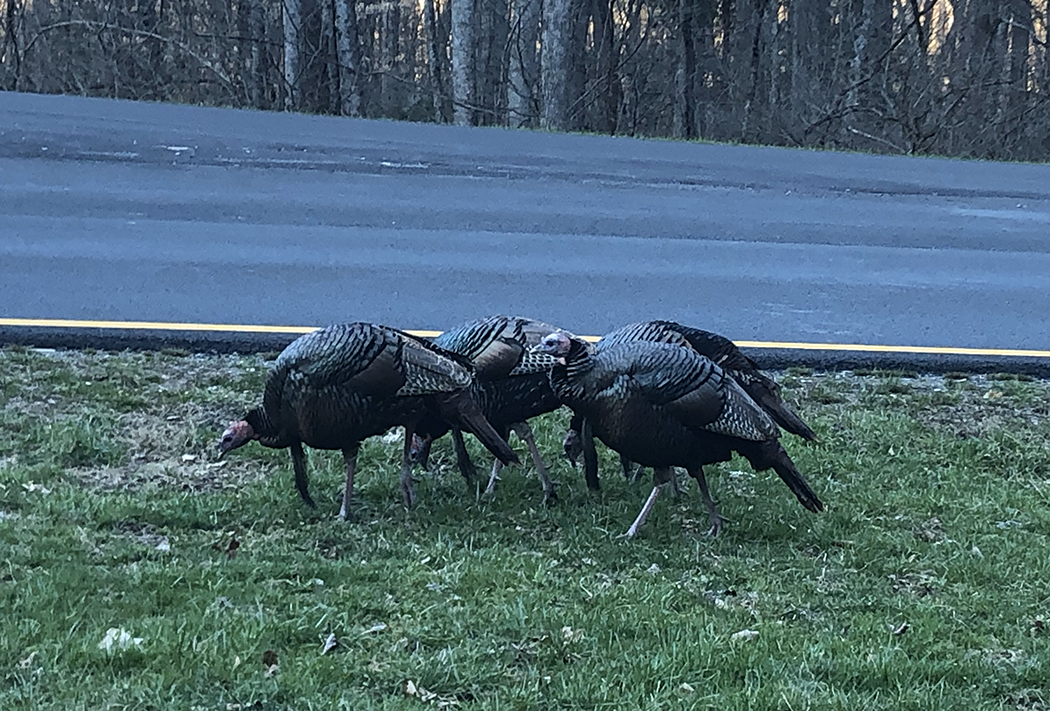 Wild turkeys holding a prayer meeting in Great Smoky Mountains National Park. Image by Jeaneane Payne |
Birds
Birds, except for a few species, often remain hidden in thick forest where they are more often heard than seen. There are about 200 species of birds in the park, including about 70-80 which are present during the winter. Elevation affects birdlife, creating a situation in which one can expect to find birds in the high country which are typical of northern New England. Some birds migrate down the mountains during the winter to escape severe conditions on the high ridges. Dark-eyed juncos are an example. Species you are likely to notice are...
Dark-eyed Junco. These are the small, gray birds with white outer tail feathers (noticeable in flight) that frequent the parking lots at Newfound Gap and Clingmans Dome.
Crow and Raven. Both of these species are black. The much-larger raven is rarely seen outside wilderness areas in the East. Crows "caw" but ravens "croak". You are not likely to see ravens unless you are in the high country.
Ruffed grouse may be encountered in the woods at almost any elevation. Without warning, they may explode from the leaves to wing off through the trees. Grouse are chicken-size ground-feeding birds and are mostly brown in color.
Wild turkeys are most likely to be seen in Cades Cove in open fields during the early morning and evening hours. Though these birds are wary, hikers may occasionally glimpse them too.
Snakes
Snakes are common in the park. There are 23 species, including two that are poisonous. These are:
Timber rattlesnakes and copperheads. The former species commonly reaches three feet in length, is thick-bodied with patterned markings of brown and black, and usually will buzz when it detects the approach of people. To avoid rattlesnakes, stay on trails and off rocky, warm slopes. Rattlesnakes are rarely found at the highest elevations or during the winter. Copperheads are scarce above 2,500 feet elevation. Rocky hillsides, stone fences, and abandoned buildings are likely places to encounter them. Neither rattlesnakes nor copperheads are aggressive and their presence should not prevent you from having an enjoyable visit. Like all native animals they are protected in the park, and should be left unharmed. If they are found in areas heavily used by people, they should be reported to park rangers.
Some non-poisonous snakes are: Eastern garter snake and northern water snake. These are probably the most commonly seen species in the park. The black rat snake, northern black racer, northern ringneck snake, eastern kingsnake, and the corn snake are included among other species found here.
Amphibians
Amphibians include about a dozen toads and frogs and 27 kinds of salamanders, which is more than can be found anywhere else in North America. One species, the red-cheeked salamander, lives only within the park.
Lizards
Lizards most often found include the northern fence lizard and five-lined skink.
Fishes
Fishes include about 60 kinds living in waters both cold and warm. There are almost 600 miles of trout streams here. Of special interest to fishermen are rainbow and brown trout. These species were once stocked in park streams, but they have successfully competed with the native brook trout, reducing their numbers. Catching the latter species is therefore prohibited.
| Trip Ideas Great Smoky Mountains Facts Institute at Tremont Transportation & Airports Local News Photo Tours • Fall Photo Tour • Roaring Fork Motor Nature Trail • Smoky Mountain Fall Foliage • Fall Foliage at Kuhowi • Fall Colors in nearby towns • Fall in Wears Valley • Best Fall Hikes |
WHAT TO DO Attractions Biking Fishing Hiking Outdoor Adventure Scenic Drives Shopping Heritage, History, & Culture Nature Activities 4 SEASONS Winter Spring Summer Fall WEDDINGS Wedding Services Honeymoon Cabins |
WHERE TO EAT Restaurants Farmers' Markets Recipe Cards Surrounding Towns: • Cherokee • Gatlinburg • Pigeon Forge • Townsend • Wears Valley CONTACT |
||
