
Great Smoky Mountains National Park is home to a diverse array of mammal species, ranging from the iconic black bear to the elusive bobcat. Visitors may also encounter white-tailed deer, groundhogs, chipmunks, and various species of squirrels. The park's diverse habitats, from lush forests to grassy balds, provide essential resources for these animals.
Smaller mammals like bats, mice, and voles also play crucial roles in the park's ecosystem. Observing these animals in their natural habitat offers a unique and enriching experience for park visitors, while also highlighting the importance of conservation efforts to protect their populations and habitats.There are about 50 species of mammals, including 24 kinds of rodents in the park
| Black Bears | ||||||||||||||||||||||
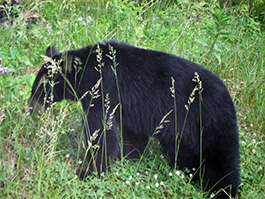 |
The black bear is the largest and most popular mammal in the park. An average adult weighs 200-300 pounds and spends much of its time seeking wild fruits, nuts, insects, and small animals. In winter, bears den up in trees, caves, or wherever they can find shelter. Healthy, mature sows usually give birth to one or two cubs during the winter. |
|||||||||||||||||||||
|
||||||||||||||||||||||
| White-tailed Deer | ||||||||||||||||||||||
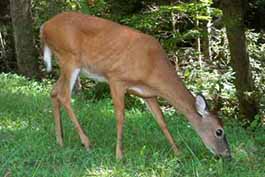 |
There are many more deer today than before establishment of the national park in the 1930s. Hunting with dogs, mountain people greatly depleted the deer population. Today, deer are so numerous in Cades Cove (where they find open fields with plenty of tender plant shoots) that herds of them can often be seen at dawn and dusk. |
|||||||||||||||||||||
Deer prefer deciduous woodlands with occasional clearings. Except when they are seeking shelter in winter they are seldom found in conifer forests. During the day these animals stay relatively quiet, but from dusk until dawn they move about seeking food. Fawns are born in late spring. |
||||||||||||||||||||||
| Elk | ||||||||||||||||||||||
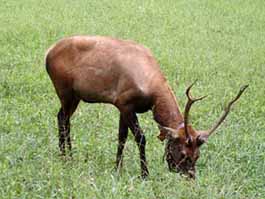 |
Elk can be viewed most frequently in North Carolina just outside Cherokee and in the Cataloochee Valley. The experimental release of elk into Great Smoky Mountains National Park began in February, 2001 with the importation of 25 elk |
|||||||||||||||||||||
| from the Land Between the Lakes National Recreation Area along the Tennessee-Kentucky border. In 2002, the park imported another 27 animals. All elk are radio collared and will be monitored during the five-year experimental phase of the project. Bison, American elk (wapiti), and wolves once ranged the park area. The bison were killed by the late 1700s, the elk by the 1840s, and the wolves by around 1900. More Information on Elk |
||||||||||||||||||||||
| Mountain Lion | ||||||||||||||||||||||
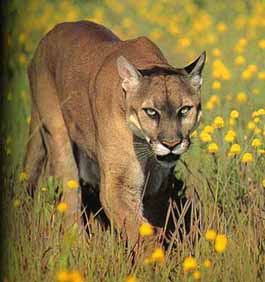 |
Predators have been hunted so relentlessly in most parts of the world that their presence has come to be identified with that of true wilderness. For those who love the wild, forested reaches of the Appalachians, it is a long hoped-for-reaffirmation of wilderness that mountain lions may be present in these ranges. Sporadic reports of sightings of mountain lions in the park are being followed up by |
|||||||||||||||||||||
| investigations. Attaining weights of 200 pounds and lengths of eight feet (including their long tails) these large, fawn-colored or gray predators are unlike any other animals in the park. But until hard proof is obtained, their presence must be categorized as questionable. (I have personally seen mountain lions and jaguars in the National Park late at night. - J. Payne, website publisher) |
||||||||||||||||||||||
| Wild Boar | ||||||||||||||||||||||
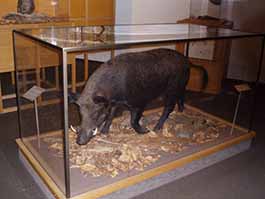 |
Wild boars are not native to the national park. In the early 1900s, a North Carolina rancher brought in about two dozen pure European wild boars to stock his hunting ranch. About 60 to 100 boars escaped. They interbred with feral hogs owned by local farmers that also roamed |
|||||||||||||||||||||
| freely in the mountains. In the past century they have spread throughout the mountainous forests of western North Carolina and eastern Tennessee. The wild boar is not a popular mammal in the park because it often roots up and devour rare native plants and animals while it is eating. Biologists in the park attempt to control the population by killing or trapping animals and relocated them to areas outside of the park. The wild boar taxidermy show in the image to the left can be seen at Sugarlands Visitor Center. |
||||||||||||||||||||||
Bobcats, red foxes and gray foxes, weasels, and mink are all predators. At dusk bobcats and foxes are sometimes seen along roads. Bobcats are carnivorous, preying on mice, birds, squirrels, woodchucks, and occasionally animals as large as deer, though the small size of these cats (under 25 pounds) usually restricts them to small prey. Bobcats have short tails. Red foxes and gray foxes are omnivorous. Both species are common in the park, but gray foxes are more numerous. Of the two, red foxes are slightly larger (12 pounds compared with an average 9 pounds for gray foxes). Weasels and mink are about squirrel-size predators, generally brownish in color, and occur throughout the park.
|
||||||||||||||||||||||
